About Anna Paskini
I'm not a clinician. I write activity books for men with dementia - the kind a daughter can open at the kitchen table on a Sunday afternoon, when she has already asked about the weather, the photo album is closed, and the next four hours look very long.

I didn’t set out to study this disease; I was forced to submerge myself in this world overnight because someone in our family needed help, and I had to find a way forward. When I went looking for a book that could sit on the table between us, everything I found was either built for institutional nursing-home groups, or written in a simplified children’s-book language that felt wrong for his age, or designed for professional therapists. Nothing that treated a 78-year-old man like a 78-year-old man.
So I kept reading. And what I took from it all is this. You cannot train the memory back. But sometimes, when the right image lands on the table at the right moment, something inside lights up. A photo of a 1968 Mustang, and suddenly he is twenty-two again, telling you about the day he drove it home. Ten minutes of the dad you remember. Then it passes. But it was there. And it counts.
So I tried, honestly tried, to turn what those people teach into something a tired visitor can hold in her hands. Large print. Stories from the world these men grew up in. Simple puzzles. A small tip in the margin for the moments when you do not know what to say next.
I do not promise it will work. Maybe a page will give you one of those ten-minute windows. Maybe it will not. I am not a doctor, I am one daughter who tried.
If something helps your family, I would love to hear about it. If something does not, I would like to hear about that too. You can write to me at anna@dadmemorybooks.com. I read every message myself.
- Anna Paskini
How these books are made
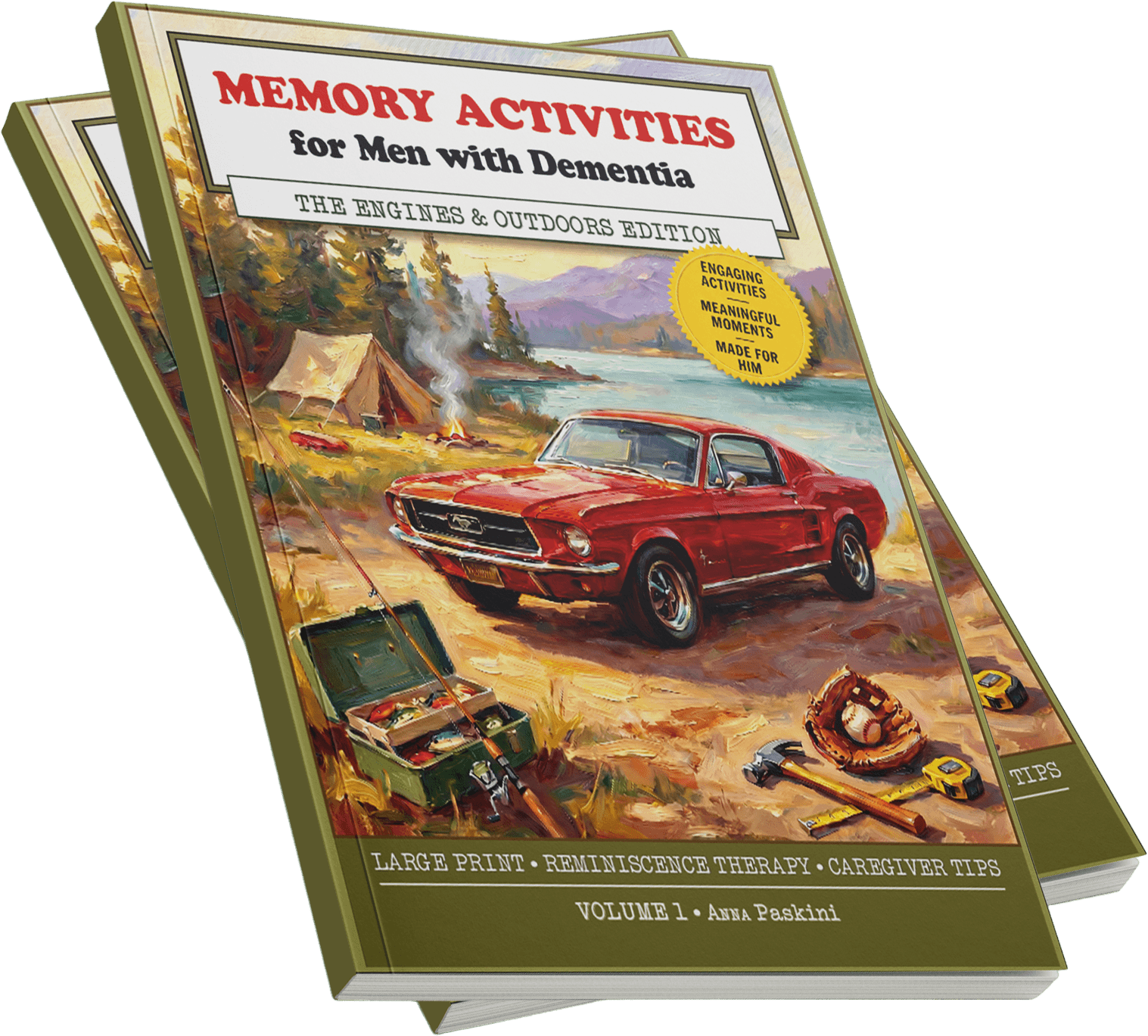
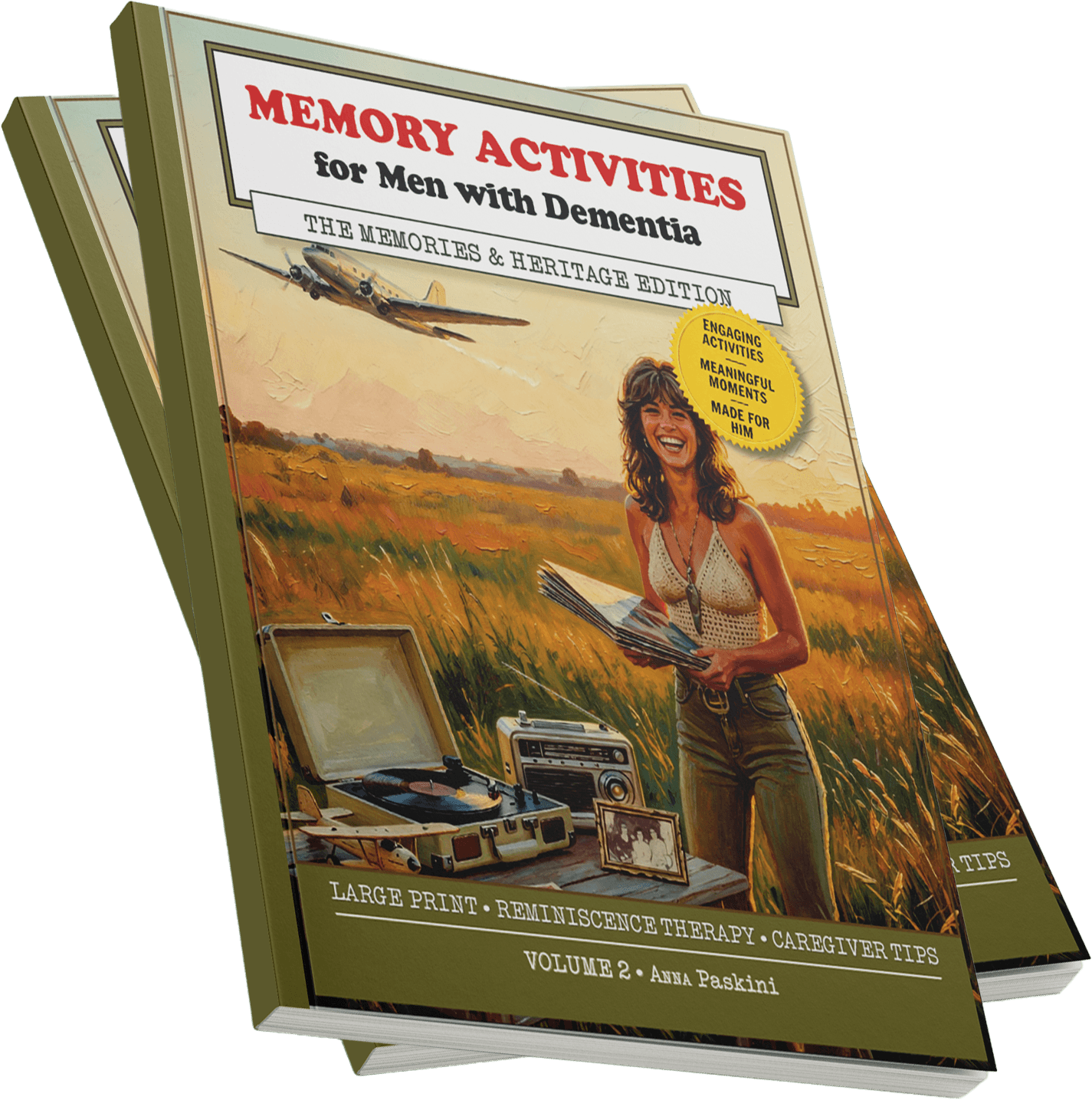
These books did not invent anything new. They lean on the work of people who have spent their careers helping families through this.
Reminiscence therapy was named by psychiatrist Robert Butler in 1963, in a paper called The Life Review. He noticed that older people whose short-term memory was fading could still reach long-term memories with the right prompt. That single idea - that the past stays accessible longer than the present - is what every page of these books rests on.
Teepa Snow built her Positive Approach to Care and her GEMS State Model around the same insight. Her work taught me that how you sit beside someone matters more than what you ask them. Naomi Feil’s Validation Therapy reframed for me what a wrong answer is - that the feeling underneath the wrong answer is usually the right one. The Alzheimer’s Association and Dementia UK have been publishing the protocols for decades. The Cochrane Library has reviewed the evidence base for reminiscence therapy in dementia care multiple times since 2005.
What I have done is small. I have taken what these people already proved works, and I have laid it out on the page in a way a family visitor can use without a training course.
Large print. Real stories. Simple puzzles. One caregiver tip per page.
If it helps for ten minutes, the book did its job.